
A win-back campaign is a targeted message — or a short sequence — sent to customers who’ve gone quiet, reminding them you’re still here and giving them a specific reason to book again. It’s the cheapest revenue you’ll find this quarter: you aren’t buying a stranger’s attention, you’re calling back someone who already paid you once and liked the work.
Most home-service businesses sit on a list of lapsed customers worth more than any ad budget, and they never message it. The pest-control account treated 14 months ago that went silent. The HVAC customer who bought a system in 2023 and has never booked a tune-up. Those people didn’t fire you — they forgot, or nobody reminded them it was time. Per Marketing Metrics research, you have a 60–70% chance of selling to an existing customer versus 5–20% for a new prospect. A lapsed customer is still an existing customer, which makes reactivating them the highest-percentage marketing you can do — and part of keeping the customers you already won.
Here’s how to run a re-engagement campaign that brings them back without sounding desperate.
Define “lapsed” for your business
“Lapsed” isn’t one number — it depends on your service cycle. Pull the list based on how often a happy customer should be hearing from you:
- Recurring services (pest control, lawn care, pool, cleaning): lapsed = past due for their next visit. If the cycle is quarterly, anyone at five-plus months without a booking is your list.
- Annual services (HVAC tune-ups, gutter cleaning, chimney): 13–15 months since the last job.
- Big-ticket, infrequent (roofing, water heaters, remodels): these rarely rebook on their own, but they refer and they need maintenance. 12-plus months is the window to check in.
Run that query and you’ll usually find a bigger list than you expected. That list is the campaign.
Segment before you send
Don’t blast the whole file. A customer who lapsed because they moved shouldn’t get the same message as one who just fell through the cracks. At a minimum, split into three:
- Lapsed but happy — left you a good review or rated the job well. Your easiest wins. Lead with warmth.
- Went quiet, no signal — no complaint, no review, just silence. Assume they forgot. A plain “you’re due” nudge works.
- Had a problem — a low rating or a complaint on file. Do not send this group a chirpy “we miss you!” text. They get a personal call or a “we know last time fell short, here’s what changed” note — or you leave them alone.
Skipping that last split is how a win-back campaign backfires into a fresh 1-star review.
Write the message like a person, not a promo
The reactivation message that works is short, specific, and sounds like it came from the owner. Bad: “We miss you! Come back for 10% off!!!” Better gives them a real reason tied to their actual service.
Recurring service, by text:
“Hi Dana — it’s Mike at Apex Pest. You’re coming up on six months since your last treatment, which is about when the ants find their way back in. Want me to get you on the schedule for next week? Booking link: [link]”
Annual service:
“Hi Sam, it’s the team at Reliable Heating. Your system is about a year out from its last tune-up — a quick service now keeps it from quitting on the first cold night. Two-second booking here: [link]”
Neither of these begs or leads with a discount. Each gives a reason rooted in the customer’s own situation and makes booking one tap. A text lands where an email dies — most lapsed customers stopped opening your email months ago, but a personal text still gets read.
Lead with value, not just a coupon
The reflex is to open with a discount. Sometimes that’s right — a first-visit-back offer can tip a fence-sitter. But price usually isn’t why they left; they left because you fell off their radar. So lead with the reason it matters now — the ants coming back, the system due before winter, the gutters before the rains — and use any discount as a nudge, not the whole pitch. A customer you buy back purely on price is one you’ll have to keep buying.
If you do offer something, keep it clean and time-boxed. “Book by the end of the month” creates urgency; an open-ended coupon never does.
Send a short sequence, then stop
One message rarely does it, and a barrage does damage. A light drip — two or three touches over a couple of weeks — beats a single blast without tipping into nagging. A sane cadence:
- Day 1: the personal “you’re due” message.
- Day 5–7: a follow-up if there’s no reply — a slightly different angle, maybe the offer.
- Day 14: one last soft touch, then you stop.
Three strikes and you move on. Someone who ignores three well-timed, friendly messages isn’t coming back from a fourth — they’re just teaching you to look like spam. Knowing when to quit is part of doing this right.
Then make it run without you
Every tactic above has the same failure point: it only works if someone actually pulls the list and sends the messages, on time, every month. Do it by hand and it happens once, in a burst, then never again — because you’re running trucks, not campaigns.
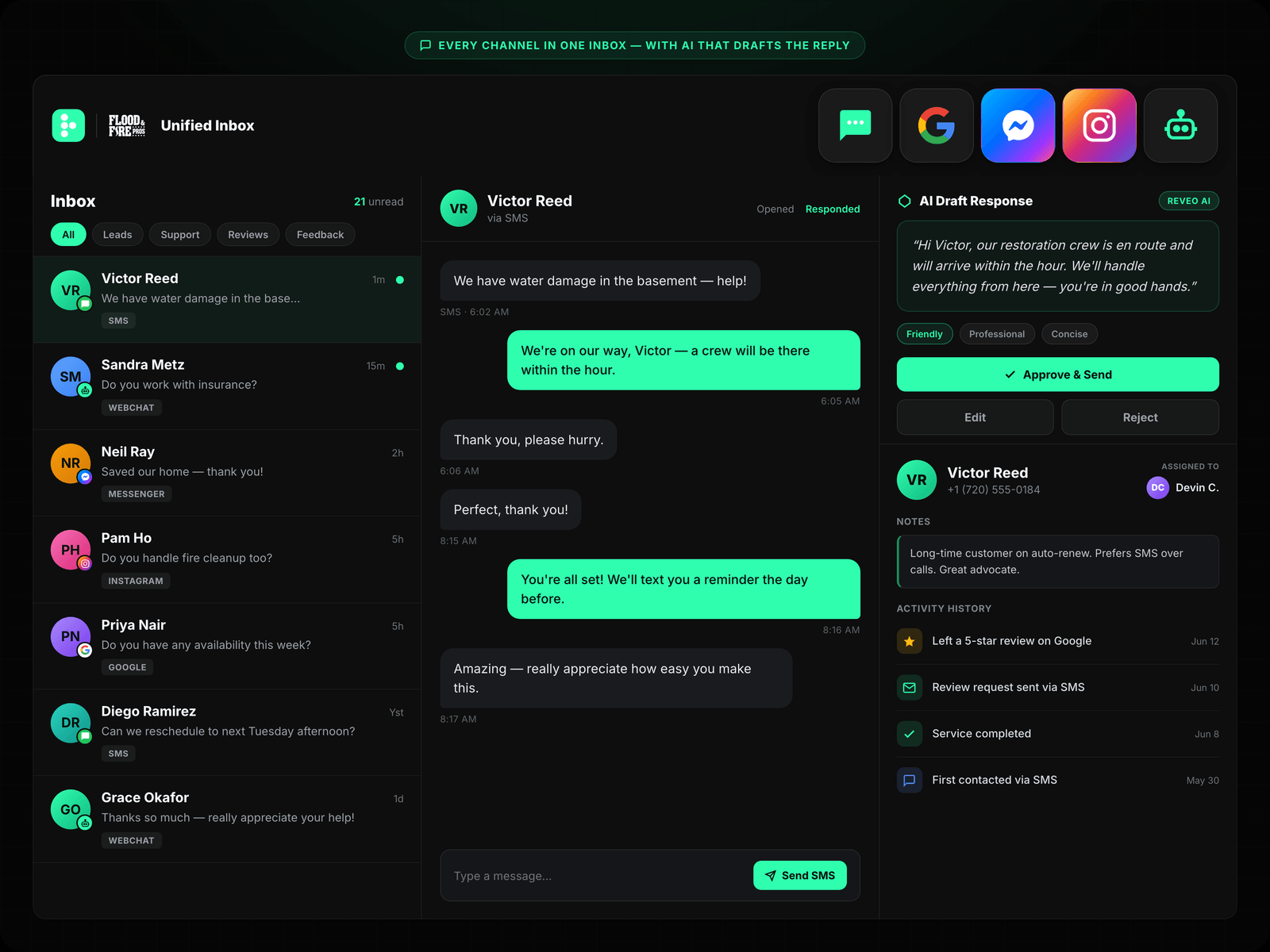
That’s the job Reveo’s value outreach does. It watches your customer list, flags who has gone past due for their service, and sends the win-back message automatically — personalized, at the right interval, with booking built in. The lapsed customer who would have quietly disappeared gets a timely, human nudge instead, and you find out when they book.
Pull your lapsed list this week and message the happy ones first. If it works — and it usually does — set it up to run on its own, so the next customer who drifts gets called back before you ever notice they were gone.