
The cheapest new job you’ll get this year is from a customer you already served. They know your work, they have your number, and they don’t need convincing that you’ll show up and do it right. Yet most home service businesses pour everything into landing the first job and then go silent — until they need the work again and wonder why the customer called someone else.
Retention is just fixing that silence. It costs roughly five times more to win a new customer than to keep one, returning customers spend more per visit than first-timers, and Bain found a 5% lift in retention can raise profit by 25% or more. This is the highest-ROI marketing you can do, and almost nobody does it on purpose.
Here are the four levers that actually move it.
1. Do the job well — then don’t disappear
Good work earns the first repeat. It does not guarantee the second, because memory is short and a competitor is one search away. The businesses that keep customers treat the finished job as the start of the relationship, not the end of it. Everything below assumes the work was solid; none of it saves you if it wasn’t.
2. Stay useful in the gap between jobs
The gap between jobs is where customers forget you. Fill it with something helpful, not salesy: a seasonal reminder tied to your trade, a maintenance nudge at the one-year mark, a quick care tip for the work you did. You’re not nagging — you’re being the name they remember when the need comes back.
This is the single biggest lever, and it’s the one most owners skip because it’s easy to forget when you’re running trucks. A furnace you fixed should become a yearly tune-up. A one-time deep clean should become a standing customer. That only happens if you stay in touch on purpose.
3. Make it personal, or it reads as spam
A “we miss you” blast to your whole list, obviously automated and addressed to nobody, does more harm than silence. Keep it personal: use the customer’s name, the service they had, and timing based on their last job. “Hi Dave — it’s been about a year since we tuned up your AC; want to get ahead of the summer heat?” lands like a text from someone who remembers him. Automation should feel personal, or it shouldn’t be automated.
4. Don’t over-message
The flip side of staying in touch is wearing out your welcome. A retention check-in landing the same day as a review request and a promo doesn’t read as attentive — it reads as spam, and people opt out of everything. Whatever tools you use to stay in touch have to coordinate, with a cap on how often any one customer hears from you.
Run it from one system
You could try to remember to check in with every customer at the right interval, personalize each message, and make sure it doesn’t collide with your review requests or promotions. You won’t — you’re running the business. The businesses that retain customers aren’t more diligent; they’ve made it automatic.
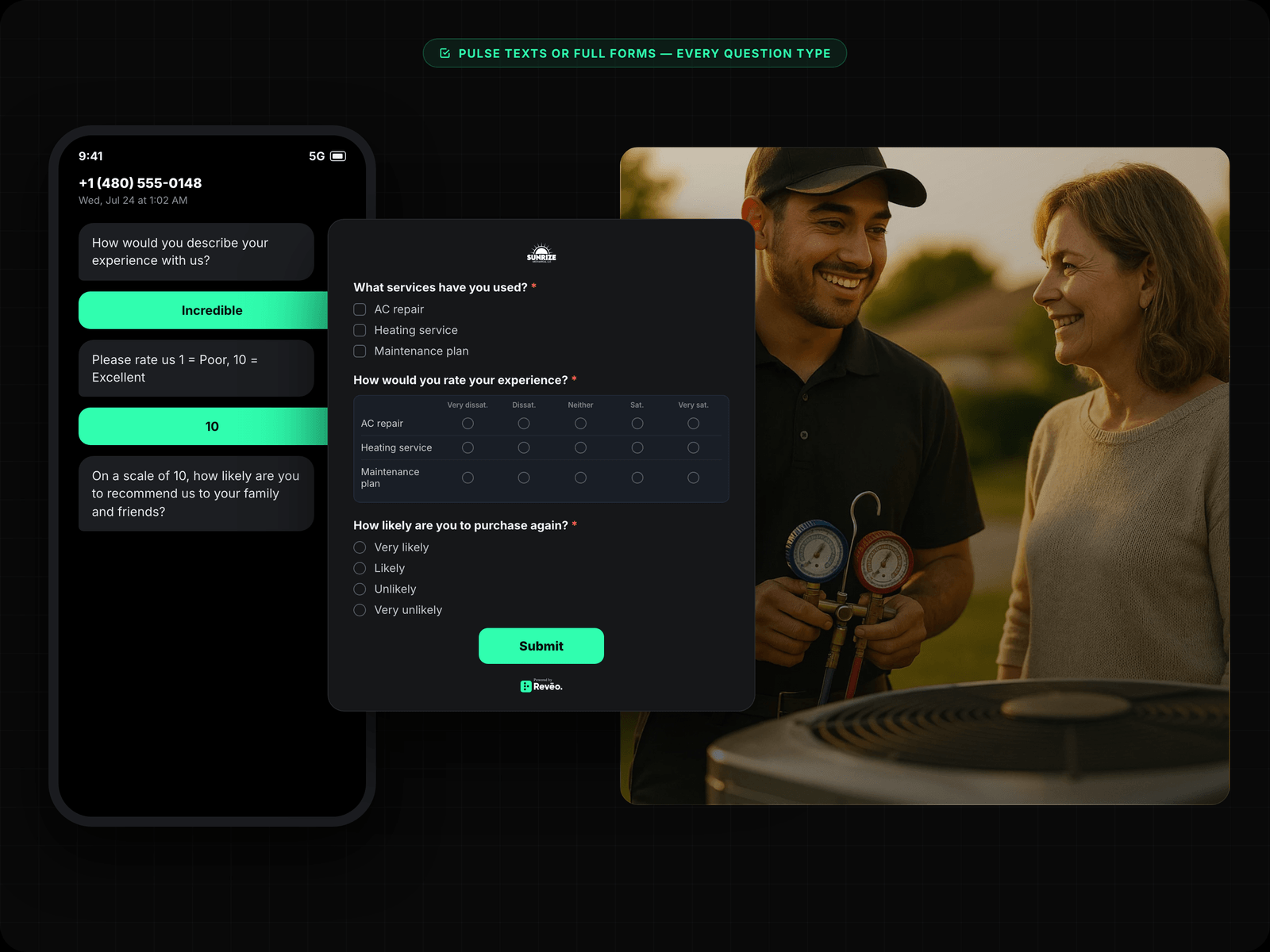
That’s what Reveo’s Value Outreach is built for: set up a nurture sequence once — thank-you, seasonal reminder, maintenance nudge — and Reveo sends each step to the right customer at the right time, personalized, with frequency caps that keep it from stacking on your other messages. The same system runs your referrals and reviews, so one happy customer feeds all three.
Keep the customers you already won. Do great work, stay useful between jobs, keep it personal, and don’t overdo it — then set it up to run on its own, and watch the jobs you’ve already done turn into the ones you haven’t.