

If you’ve got a slow week coming up, the fastest way to fill it isn’t a new ad — it’s a text to the customers you already have. Around 98% of text messages get opened, most within minutes. Your last email blast? Maybe a fifth of your list even saw it.
That open rate is the whole case for SMS marketing — and also the reason it’s easy to get wrong. A text lands in the same place as messages from someone’s mom. Earn that spot or you’ll get muted, reported, and filtered. Here’s how to use it well.
Text your existing customers, not strangers
SMS marketing works because you’re messaging people who already know you — past customers, not cold leads. They gave you their number when you did their job. That relationship is what makes a promotional text feel like a heads-up instead of spam.
So the goal isn’t reach, it’s relevance: getting the right offer to the right slice of the customers you’ve already earned. That’s cheaper and higher-converting than any campaign to buy new attention. It costs roughly five times more to land a new customer than to sell to an existing one.
The offers that actually convert
Vague doesn’t sell over text. “Book with us today!” gets ignored. A specific, time-bound reason to act gets a reply. The ones that work for home service businesses:
- Fill a slow week. “We’ve got two openings this Friday — 10% off if you book by Wednesday.” You’re not discounting your whole book; you’re selling capacity that would otherwise sit empty.
- Seasonal timing. The pre-summer AC tune-up, the fall gutter clean, the spring pest treatment. You know the calendar of your trade better than any marketer — text the reminder right before the rush.
- Win back lapsed customers. Anyone who hasn’t booked in a year is a warm lead who forgot about you. “It’s been a while — here’s 15% off your next visit” reactivates more of them than you’d guess.
- Announce something real. A new service, a new location, extended hours. Keep it to one message and one link.
Segment, or you’ll burn your list
Blasting your entire list the same message is the fastest way to train people to ignore you — and to trip the carrier spam filters that quietly stop delivering your texts. The businesses that get results send less, to more relevant groups.
Slice by location, service type, or last-service date. A pool-cleaning promo goes to pool customers, not the whole list. A “we miss you” offer goes to people who haven’t booked in a year, not the ones you serviced last week. Every message someone gets should make sense for them, or don’t send it to them.
The compliance part nobody wants (but that keeps you in business)
This is the part most “just text your customers” advice skips, and it’s the part that can actually cost you. Promotional texting is regulated, and getting it wrong means fines under the TCPA and getting your number blocked by carriers.
The rules that matter:
- Get consent and honor opt-outs. Only text customers who agreed to hear from you, and make STOP work instantly, every time.
- Register for 10DLC. Carriers require business texting numbers to be registered, or your messages get filtered into the void — delivered on your end, never arriving on theirs.
- Respect quiet hours. No 9 p.m. promos. It’s the law in a lot of places and it’s just bad manners everywhere.
None of this should scare you off — it’s table stakes, and the right tool handles most of it for you. But advice that tells you to blast your list without mentioning any of this is advice that gets you penalized.
Make it repeatable
You can send one great promo by hand. The value shows up when it’s a habit — the seasonal reminder that goes out every year, the slow-week offer you fire when the calendar looks thin, the win-back that runs on autopilot for anyone who’s gone quiet.
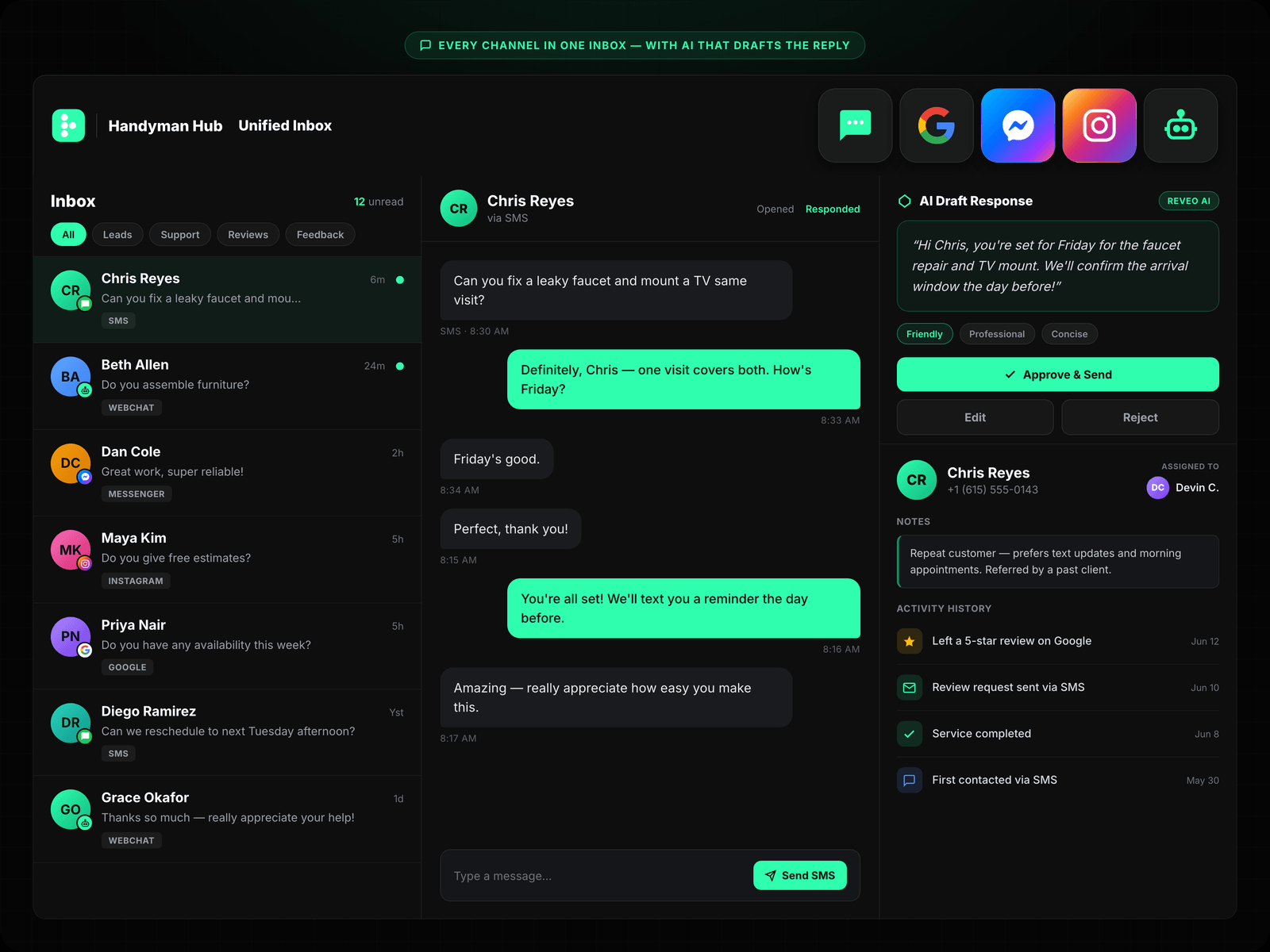
That’s what Reveo’s Promotions are built for: compose a text-and-email promo once, target the right segment, schedule it, and let Reveo handle 10DLC, opt-outs, and quiet hours so every send stays compliant. It runs on the same engine as your review requests and customer messaging, so your promos never collide with the other messages a customer’s getting.
Text the customers you’ve already earned. Give them a specific reason to act. Keep it relevant and keep it legal. Done right, your phone becomes the cheapest, fastest marketing channel you own.