
Email marketing for home services works best as a retention engine, not a lead machine. The customers already in your list — the ones who’ve paid you before — are worth far more than any cold audience you could buy, and email is the cheapest way to get them to call you again instead of Googling a competitor when the drain backs up.
That’s the frame most owners get wrong. They treat email like advertising, blast a discount to strangers, get nothing, and decide email is dead. It isn’t. For a pest control company or an HVAC shop with a few thousand past customers, email is close to free, it’s a channel you own outright — no algorithm decides who sees it — and it drives repeat work while you’re running the trucks.
Here’s how to make it actually earn.
Email is a retention play — treat it like one
Your list of past customers is the highest-intent audience you’ll ever have. They’ve let you into their home, paid an invoice, and most of them will need the same service again. Keeping an existing customer costs a fraction of what it takes to win a new one, and email is how you stay in front of that audience for pennies.
Compare the math. A paid lead from Angi or Google Local Services can run $30 to $100. Emailing a customer you already earned costs a fraction of a cent. Litmus pegs average email ROI at about $36 for every $1 spent — and for service businesses with a real customer list, it skews higher, because you’re not paying to reach cold traffic.
The opinionated version: if you have more than a few hundred past customers and you’re not emailing them, that’s the first marketing gap to close — before you spend another dollar on ads.
What to actually send
Most newsletters fail because they’re about the business, not the customer. Nobody opens “Our Q3 Company Update.” They open the email that reminds them of something they need to do.
Four types earn their place:
- Service reminders. The quarterly pest treatment, the annual furnace tune-up, the gutter cleaning before fall. A pest control company like BRD, with 30,000 customers on recurring schedules, lives or dies on these — the reminder that lands two weeks before the season turns is the one that books.
- Seasonal nudges. “It’s almost freeze season — here’s what to check.” Genuinely useful, tied to the calendar, with a soft booking link. This is the backbone of seasonal marketing for home service businesses.
- The occasional promotion. A spring AC-check special, a referral bonus, a slow-month discount to fill the schedule. Used sparingly, these work. Sent weekly, they train people to ignore you.
- A real newsletter — light. Short, useful, human: one seasonal tip, one recent job you’re proud of, one reminder. Two hundred words, not two thousand.
Notice what’s missing: daily blasts, hard sells, and anything that reads like a coupon circular.
Send less than you think — but consistently
The biggest email mistake service businesses make is sending too often and burning the list. You’re not a daily-deal site. Once or twice a month is plenty for most home-service businesses, with extra sends tied to real seasonal moments.
The tradeoff is real. Email more and you’ll get more immediate clicks — and more unsubscribes and spam complaints, which quietly drag down every future send’s deliverability. Email less and each one carries more weight and lands in the inbox instead of the promotions tab. For a business that isn’t running daily specials, restraint wins.
Consistency beats volume. A useful email every month for two years builds a list that opens and books. Six emails in one panicked slow week trains people to tune out.
Build the list without being sketchy
You can’t email customers you never captured. The list is the asset — build it as a habit, not a campaign.
- Capture the email at booking and at invoice, every time. Most home-service software already has it; make sure it’s actually saved.
- Add a checkbox on your booking form for seasonal tips and offers. Plain, honest opt-in.
- Never buy a list. Purchased lists tank your deliverability and torch your sender reputation — you’ll land in spam for the customers who do want to hear from you.
A clean list of 2,000 real past customers outperforms a bought list of 50,000 strangers every time.
Make it feel personal, or don’t send it
A generic blast to your whole list is worse than no email. The pest customer on a quarterly plan and the one-time gutter-cleaning customer need different messages, and the tools to split them are basic now.
Segment by service type and last visit. Send the furnace-tune-up reminder to people with furnaces. Send the “we haven’t seen you in a while” note to customers who’ve gone quiet. A 47-location franchise like Scoop Soldiers can’t hand-write to every customer — but it can send the right reminder to the right segment automatically, and that reads as personal even though nobody typed it by hand.
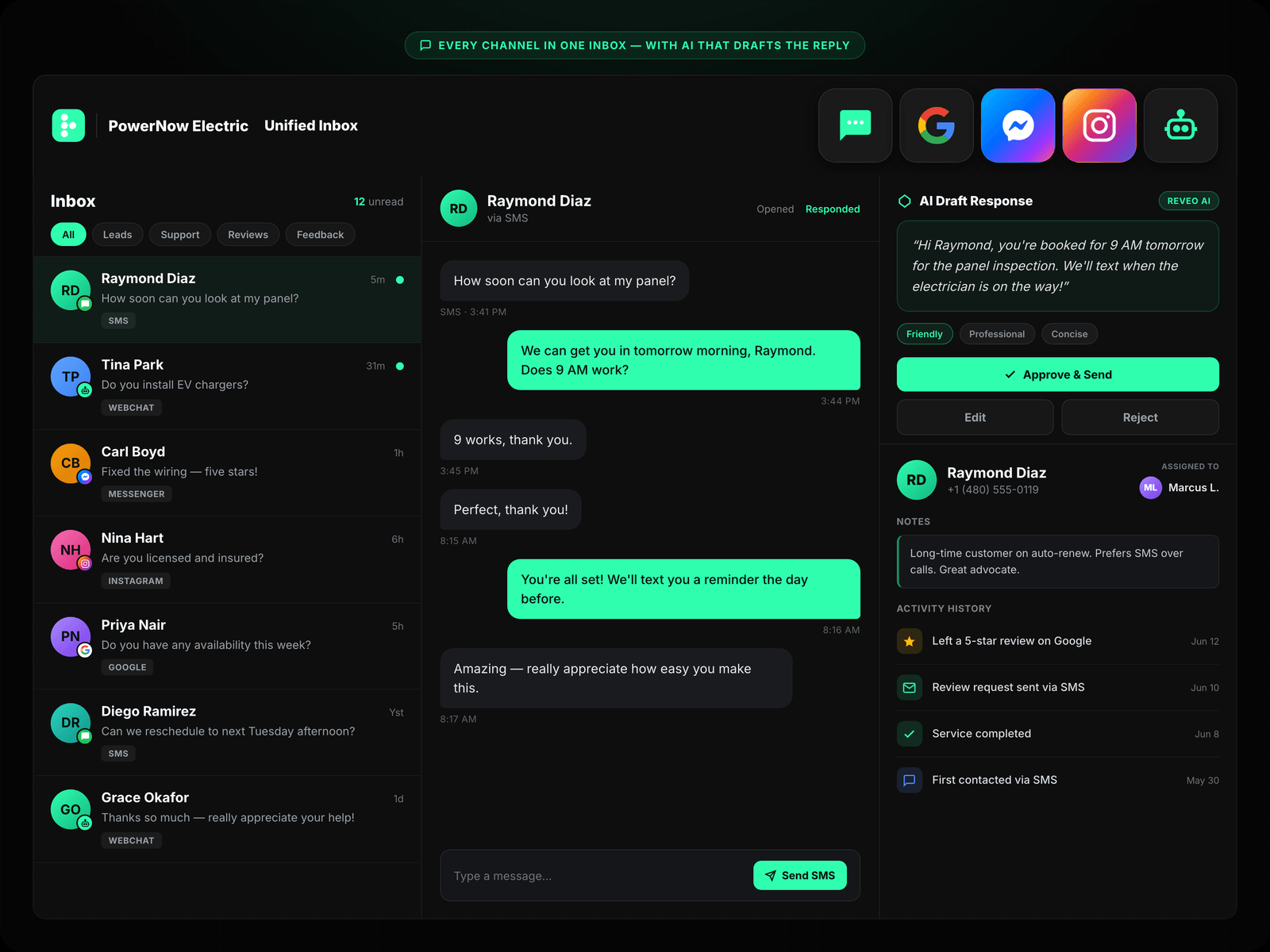
Reveo’s promotions and campaign tools handle this: build the email once, segment by who the customer is and what they last booked, schedule it to the season, and let it send in the background. It runs in the same system as your review requests and SMS campaigns, so email isn’t a separate chore — it’s one more channel firing from the customer list you already have.
Where to start
Pick one email. The service reminder is almost always the highest-value first send — it books real jobs from people who were going to call someone anyway. Write it once, segment it to the customers it applies to, and schedule it. Then add a light monthly newsletter so you stay in the inbox between jobs.
Set up your first reminder or promotion campaign and let it run. The customers you already earned are the cheapest growth you’ll ever get.